
INVESTIGATION
Explore Investigation
Recording what we find
The value of an inspection depends upon the quality of the information it produces. Depending upon the project, our documentation may include:
systematic photographic records
annotated drawings
CAD mark-ups
consistent element numbering
defect classifications
repair coding
prioritisation
identification of immediate hazards
identification of matters requiring specialist engineering or conservation review.
Close-range visual and tactile inspection




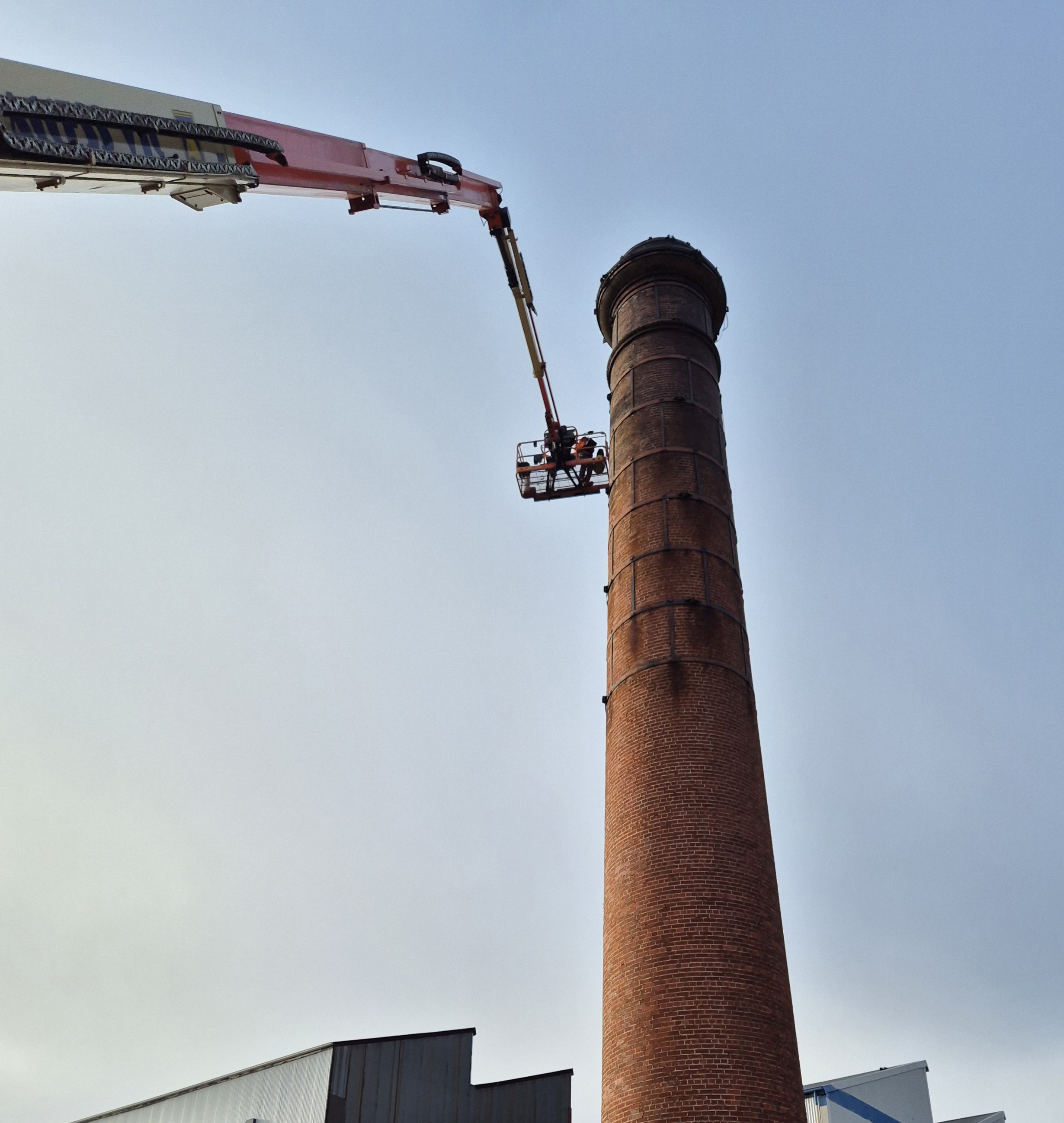
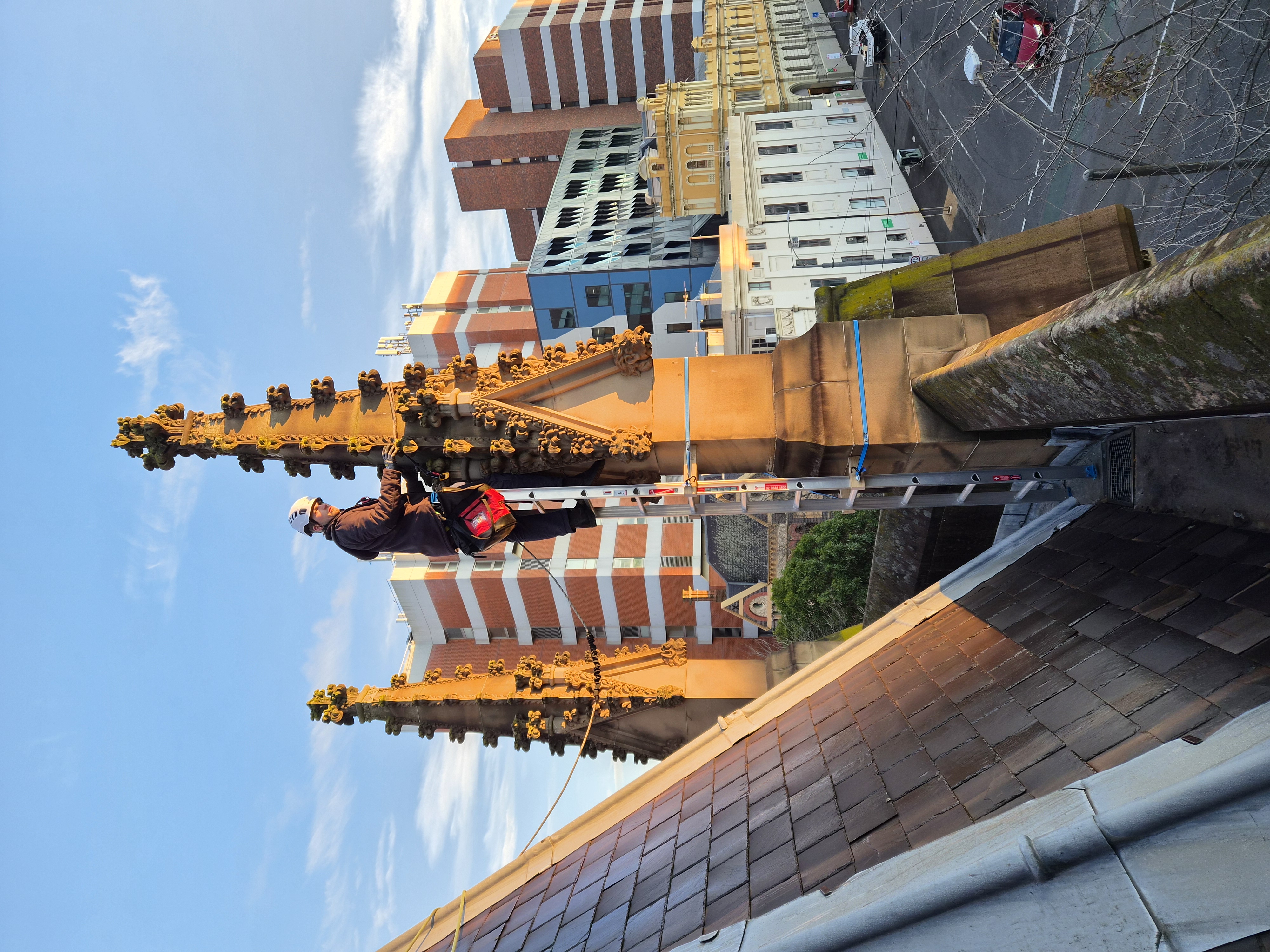
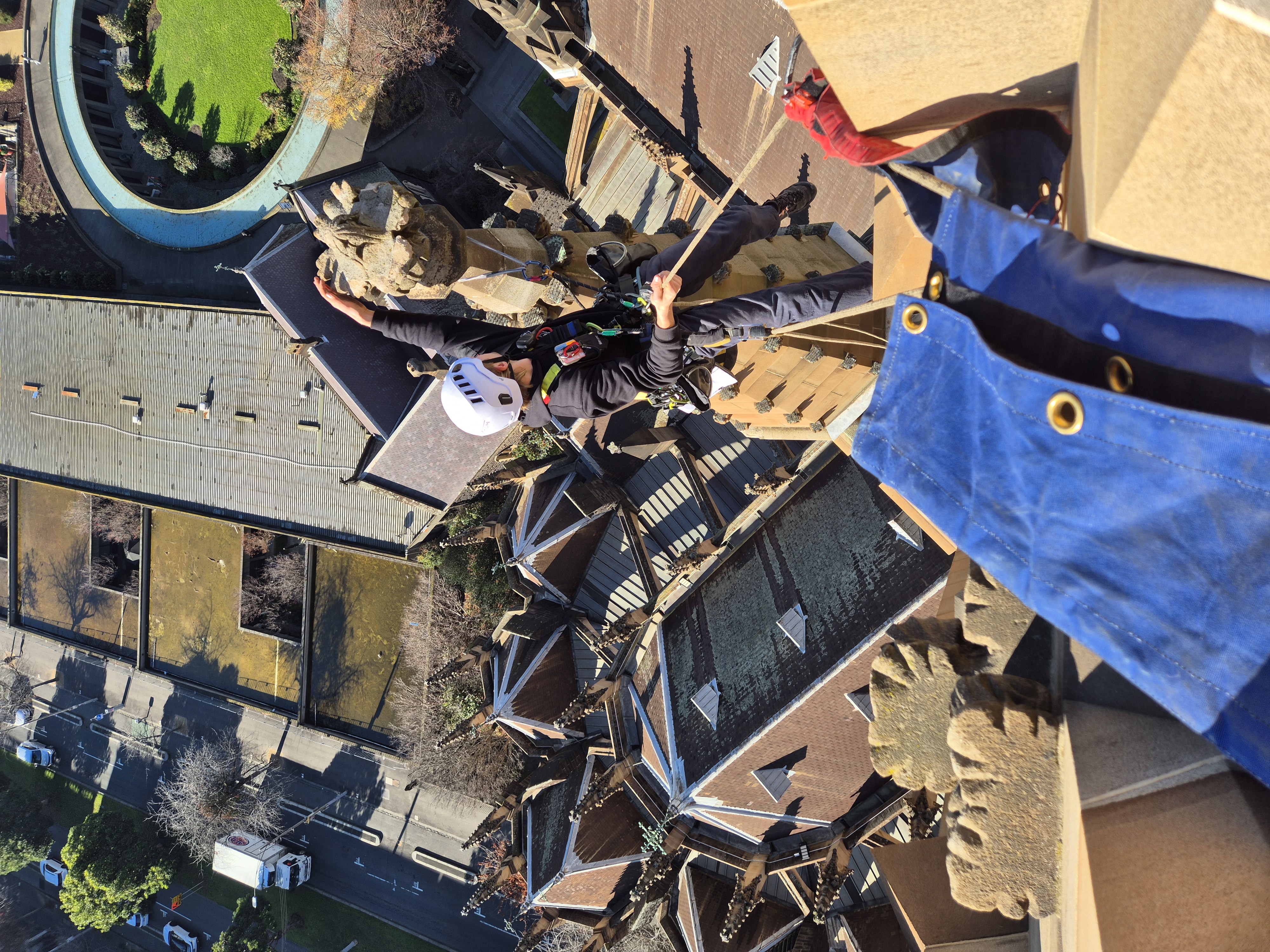
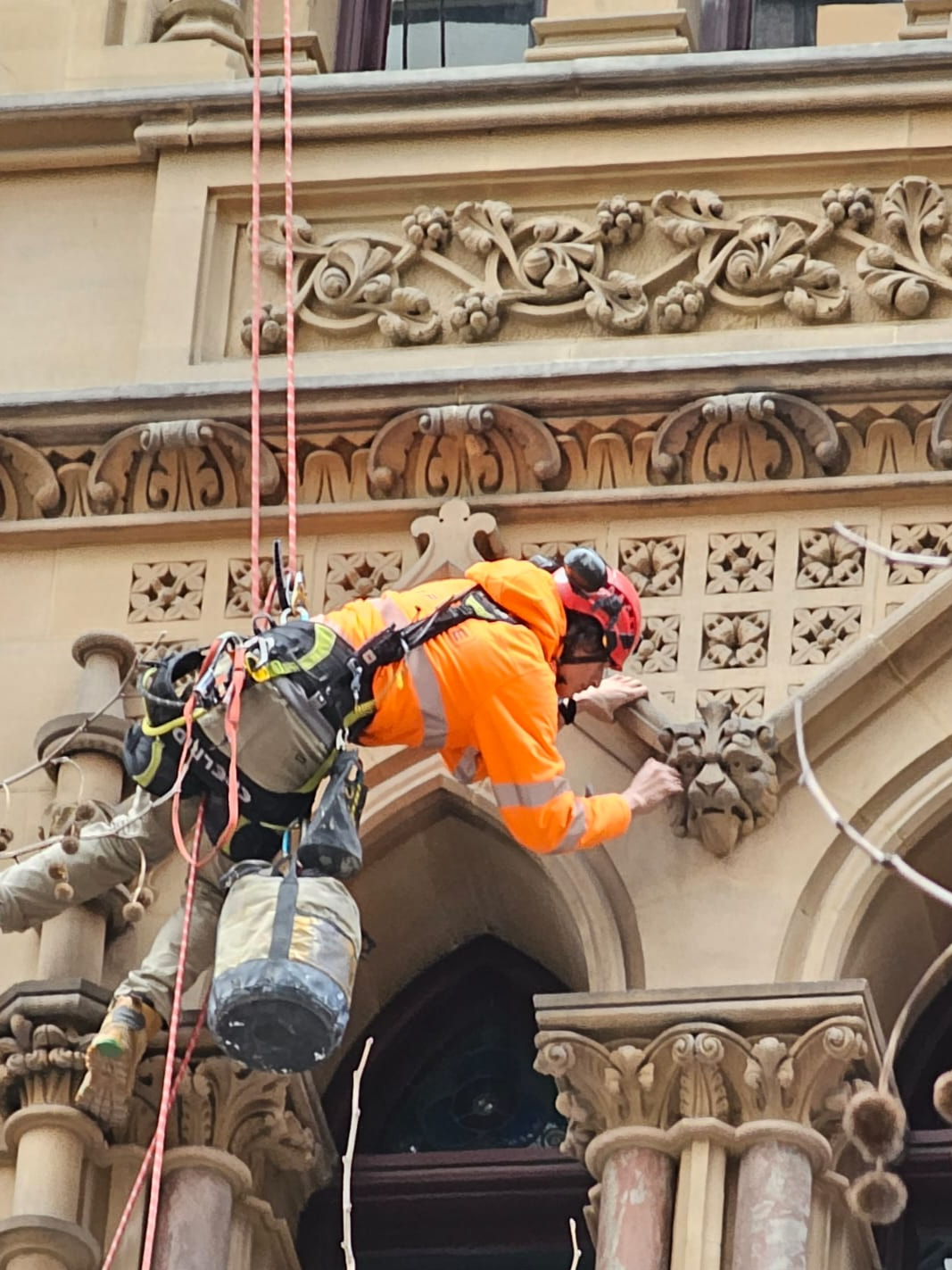
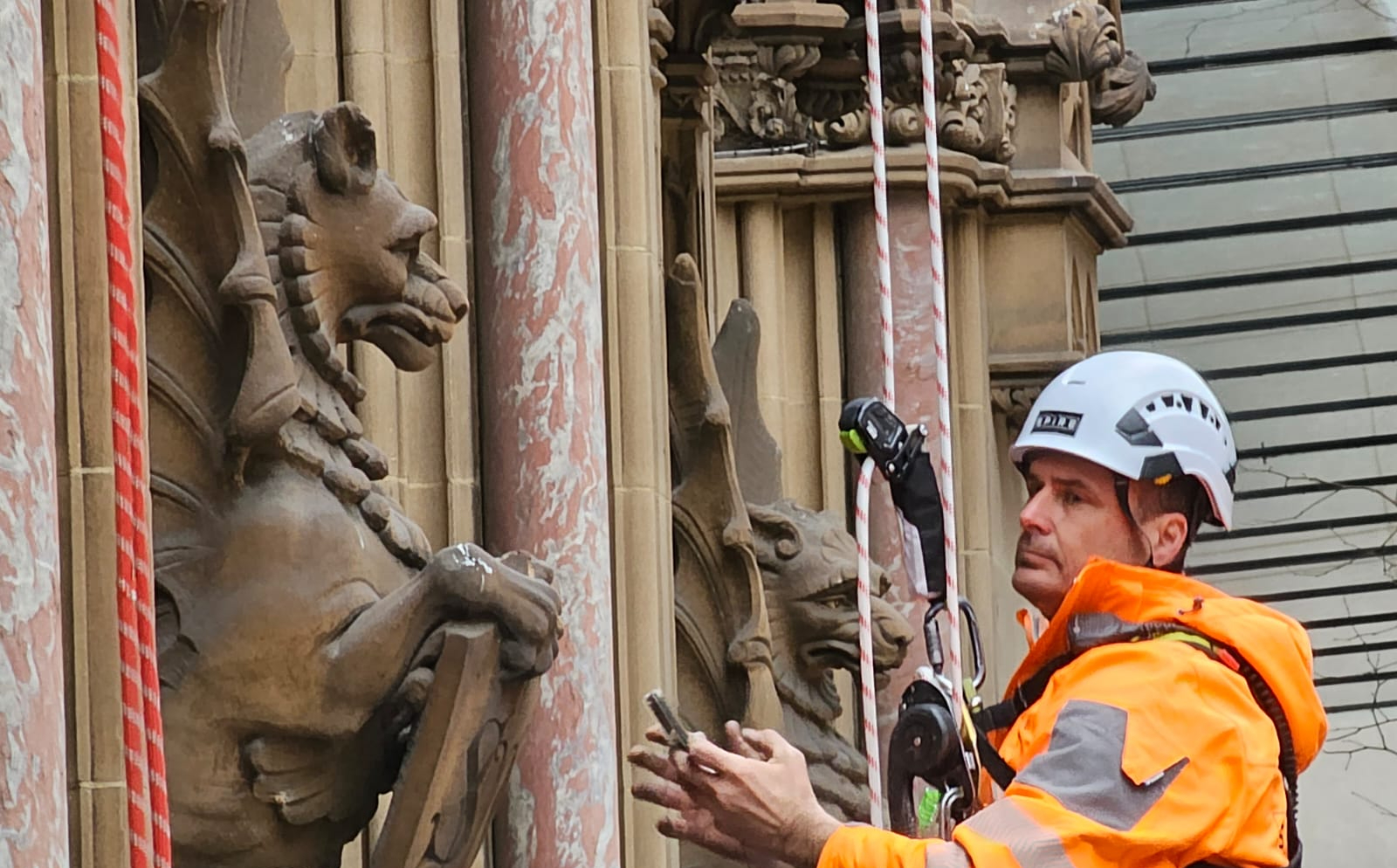
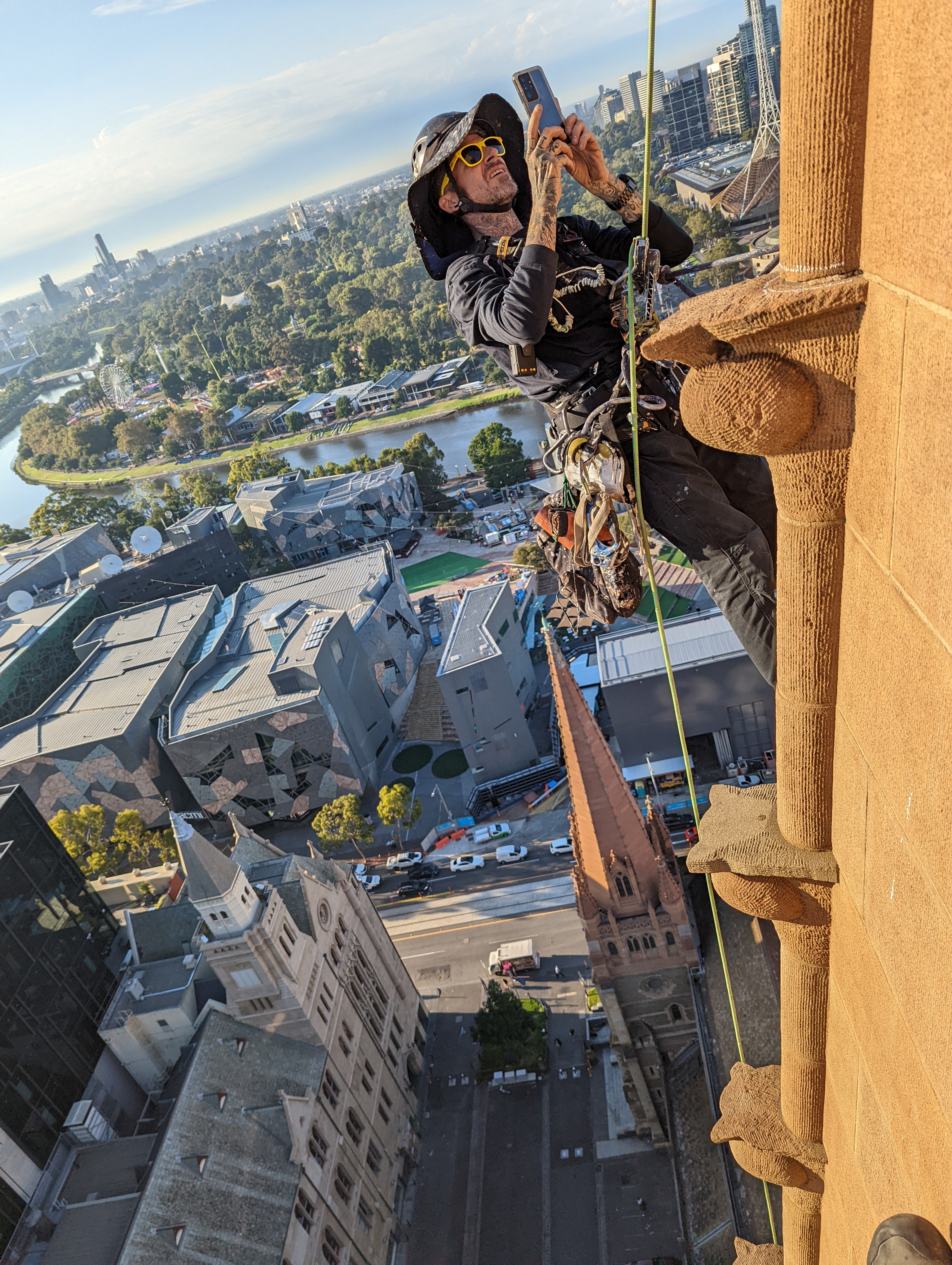
Spire specialises in physical inspection of difficult-access building fabric.
Being within arm's reach allows the inspector to do more than photograph a defect. Masonry can be sounded, joints examined, surfaces felt, movement followed across adjacent elements and apparently isolated conditions understood in their architectural context.
This distinction is particularly important on highly articulated heritage structures, where deterioration can be concealed within joints, crockets, pinnacles, finials, tracery and other projecting elements.
Get close. Look carefully. Understand before deciding.
Many of the most consequential defects in buildings occur where routine inspection is most difficult.
Weathering at the top of a spire. Movement through a pinnacle. A failed mortar joint behind projecting stonework. Corrosion concealed within a fixing. A seemingly minor crack whose significance only becomes apparent when followed across adjoining masonry.
Remote imagery can identify many of these conditions.
It cannot always explain them.
From inspection to decision
Our objective is not to manufacture a scope of repair.
It is to establish reliable evidence.
That evidence allows the building owner and professional team to determine what requires intervention, what can be monitored, what requires further investigation and what should simply be left alone.